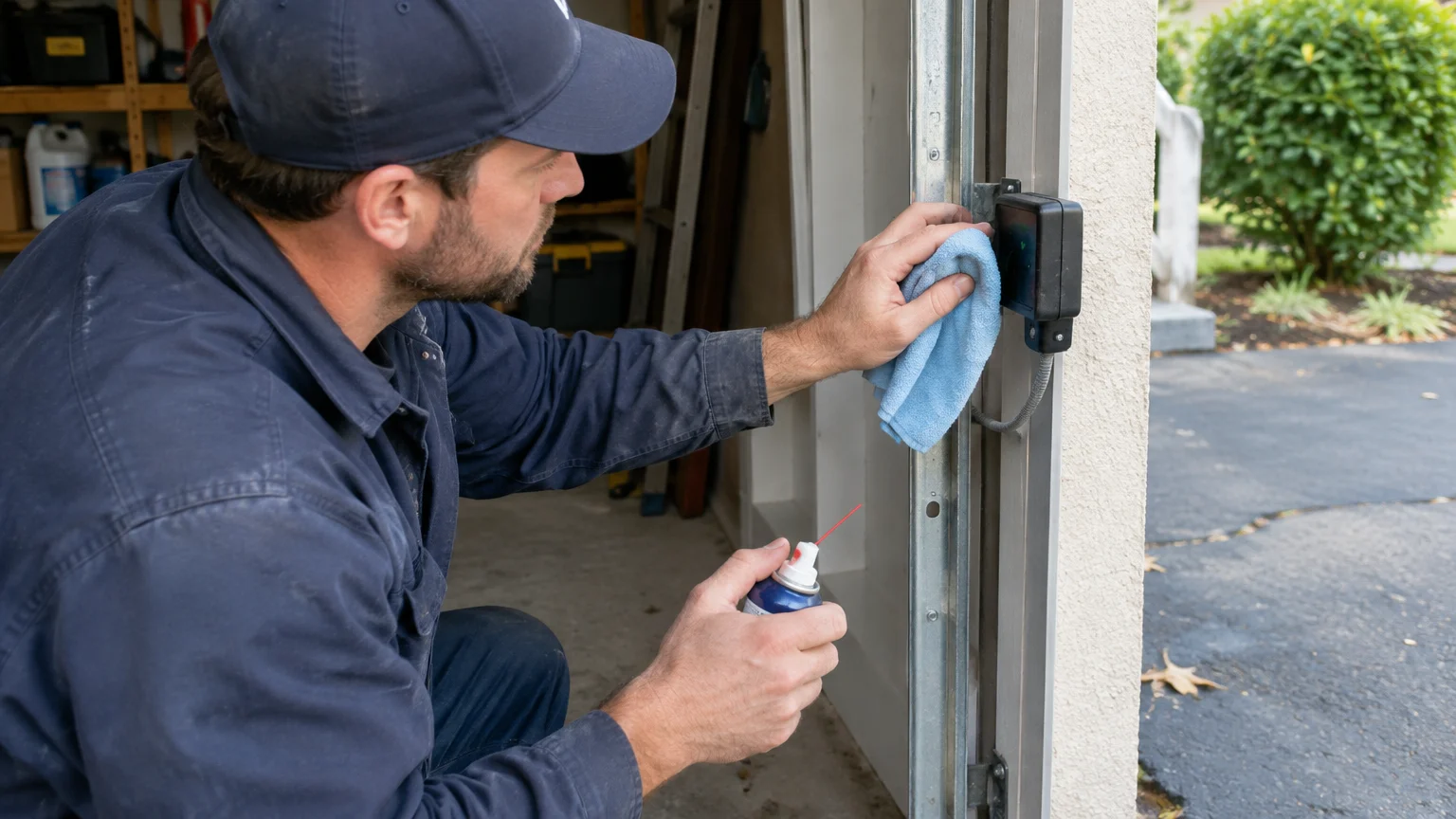
Garage door sensor cleaning can help when a door will not close because dust or an object blocks its safety beam. In Niles, homeowners can safely clear the beam path, wipe the lenses, and check whether the sensors face each other. These simple checks may fix a small problem or show when repair help is needed.
How do garage door safety sensors work?
Garage door safety sensors help stop a closing door when something is in its path. They sit near the floor on each side of the garage opening and face each other. One sensor sends an unseen beam, and the other one receives it. If an object breaks that beam, the opener should stop or send the door back up.
This beam helps protect people, pets, and belongings from a closing door. A toy, storage bin, leaf, or dirt on a lens can block it. A sensor may also stop working if it loses power, has a damaged wire, or moves out of line. When this happens, the opener may refuse to close the door or may reverse soon after it starts moving.
What do the sensor lights mean?
The small lights on the sensors can offer a clue. Their meaning depends on the opener’s brand and model. A steady light may mean the sensor has power and can see the other sensor. A blinking or dark light may point to a blocked beam, poor alignment, lost power, or a wiring problem. Check the owner’s manual for the right meaning for your opener.
Look at both lights from a safe place while the door is still. Do not reach under a moving door or touch wires. If both lights look normal but the door still will not close, the problem may be in another part of the opener or door. Niles Garage Door Repair can help homeowners understand what to check next.
A door that will not close can leave a home or business open to weather and unwanted entry. Keep children, pets, and other people away from the opening while you check the sensors. Do not treat a working safety sensor as a nuisance, and never force the door shut.
How do you clean garage door sensors safely?
Garage door sensor cleaning is a simple upkeep task when the lenses are easy to reach and the door is still. You do not need to take apart the opener or touch springs, cables, or other parts under strong tension. A soft, dry cloth is usually enough to remove dust from each lens.
Before you begin, make sure the door is fully open or fully closed and will not move during the check. Keep your hands away from the tracks and hinges. Do not spray cleaner or water on a sensor. Avoid rough cloths or tools that could scratch the lens. If a sensor hangs loose or has a damaged wire, stop and arrange professional help.
Use these simple checks:
- Look for leaves, cobwebs, bins, or other things blocking the beam between the sensors.
- Gently wipe each sensor lens with a clean, soft, dry cloth.
- Check that each sensor bracket looks secure and both sensors face each other.
- Look for wires that seem loose, cut, or worn, but do not pull or unplug them.
- Move objects away from the doorway, then see whether both sensor lights come on.
After cleaning, use the wall control to test the door while standing clear of it. Watch to see whether the door closes smoothly and stays closed. If it reverses, stops, or moves in an odd way, do not keep testing it. A trained repair person may need to check the system more closely.
Dust is only one possible cause of a sensor problem. Bright sunlight can sometimes affect the beam, depending on the opener and the sun’s angle. If the problem comes and goes at certain times, note when it happens and tell the repair professional. Do not cover a lens to block sunlight, because that can also block the safety beam.
How can you realign garage door sensors?
A sensor may be out of line if its light changes when the sensor moves gently. The door may also work after someone nudges the bracket. Both sensor faces need to point toward each other across the doorway. Even a small shift can interrupt the beam, though the sensors may still look close to level.
First, make sure the door is still and the area around the sensors is clear. Look at the brackets from the front. If a sensor is visibly turned, you may gently move it only if the bracket moves easily and no wire is pulled tight. Do not bend metal, force a bracket, or loosen a part that is damaged or firmly fixed.
How should the door be tested afterward?
When both sensors face each other and their lights show the expected status, test the door with the wall control. Stand in a safe place and keep people, pets, and objects out of the opening. Watch the door through its full movement. If it starts to close and then reverses, stop the test and check the opener manual for help with the sensor lights.
A successful test does not mean the sensors can be ignored or bypassed. They must stay in place and work as designed. If a bracket will not hold its position, a light stays off, or a wire looks worn, do not try more repairs yourself. Garage Door Maintenance can help find wear before it causes another problem.
Do not try to repair a spring, lift cable, or bottom bracket while checking the sensors. These parts can be under strong tension and may cause serious harm if handled the wrong way. A garage door spring can move with great force if it breaks or comes loose. A trained professional has the right tools to check these parts safely.
Niles Garage Door Repair serves Niles and nearby communities, including South Niles, McKinley Heights, Warren, Girard, Lordstown, and Cortland. If your door remains stuck or unsafe, a repair professional can look at the sensors and the rest of the door system. Keep clear of any door that moves unevenly or seems likely to fall.
What should you do if the door still will not close?
If cleaning and a simple alignment check do not help, the cause may be a wiring fault, sunlight, or an opener problem. A door that will not open may also have a wider issue. Sensor lights can give useful clues, but they cannot confirm every fault in the opener or door system.
Check that nothing blocks the beam, and note what the sensor lights do. Stop using the door if the opener makes strange sounds, the door moves unevenly, or a cable looks loose. Keep the opening clear and do not force the door down. A heavy door can fall or move without warning when a part has failed.
Never tape, cover, unplug, or bypass the safety sensors to make the door close. Doing so removes a safety feature that helps keep the door from closing on a person, pet, or object. If a vehicle is trapped inside, do not try to lift a heavy or uneven door by hand. A repair professional can check the opener, wires, and door parts, then advise you on safe access.
Key takeaways
- Keep the sensor path clear and wipe the lenses with a soft, dry cloth.
- Sensor lights may point to a blocked beam, poor alignment, or loss of power.
- Make only gentle adjustments when the bracket moves easily and wires stay safe.
- Never bypass the sensors or handle springs, cables, or bottom brackets.
Frequently Asked Questions
Why will the garage door close only when the wall button is held?
The opener may sense that the safety beam is blocked or not working as expected. Check for objects in the beam path and gently clean both sensor lenses. If the door still closes only while you hold the button, stop using it that way. Ask a repair professional to check the sensors, wires, and opener.
Can sunlight stop garage door sensors from working?
It can happen with some sensor and opener setups when bright light falls on a sensor. Note when the problem occurs and check for anything else that may block the beam. Do not cover or unplug a sensor. A repair professional can check whether sunlight or another problem is causing the trouble.
Should a homeowner replace a damaged sensor wire?
A homeowner should not pull, splice, or unplug damaged sensor wires. A visible wire problem can affect safe operation, and its cause may not be clear just by looking. Stop using the door if it acts in an unsafe way. Ask a trained repair professional to inspect the wiring and door.
When should someone call for garage door repair near me?
Arrange local repair help when cleaning and a safe visual check do not restore normal operation. Get help if wires, brackets, cables, or other parts look damaged. A stuck door can affect home or business security. Niles Garage Door Repair can help identify what needs attention.
Conclusion
A clear beam path and well-aimed sensors can solve some door-closing problems. Clean the lenses gently, keep the doorway clear, and test the door from a safe place. Do not bypass the sensors or work on parts under strong tension. If your door remains stuck or unsafe in Niles, Contact us to arrange repair help.
For more information about the service provider, visit Niles Garage Door Repair.
If you are not sure what you are dealing with, it is worth having someone look at it before it turns into a bigger job. Get in touch with Niles Garage Door Repair today and we will tell you where you stand.